


One of the most common ways social anxiety affects young adults today is in the realm of modern dating, relationships and marriage. And honestly, who can blame them?
According to recent data, a staggering 69% of Gen Z cite mental health as their biggest barrier to dating, while 61% report hitting a wall of dating app burnout within just three months of swiping.
The modern dating world has transformed dramatically, driven by the ubiquitous use of dating apps and social media. Add to that the sensory overload of constant “dating advice” videos—which often devolve into harsh criticisms of either gender peppered between engagement highlight reels—and you have a perfect recipe for full-blown, anxiety-driven avoidance.
The resulting dating fatigue is real. Nobody can keep up with the noise.
The Vulnerability Paradox: Dating Apps and Rejection Sensitive Dysphoria
In addition to the overwhelming nature of media, there’s a newer term being casually floated in these spaces: “rejection sensitive dysphoria” (RSD). While everyone inherently dislikes rejection, Gen Z frequently uses this term to describe the intense, almost physical emotional pain that comes with modern digital interactions.
Today, young adults are tasked with a massive, contradictory challenge:
- The Exposure: Put yourself out there publicly and be vulnerable to thousands of strangers on apps like Tinder, Hinge or Bumble.
- The Expectation: Remain completely nonchalant and unaffected when people inevitably reject or ghost you.
- The Curation: Look happy, thriving and perfectly curated while doing it (take a selfie enjoying that seven-dollar matcha with a smile!).
It’s no wonder that young adults struggling with social anxiety disorder feel the urge to curl up and reject the entire online dating system.
Seven Signs of Gen Z Dating Fatigue: Voices from the Trenches
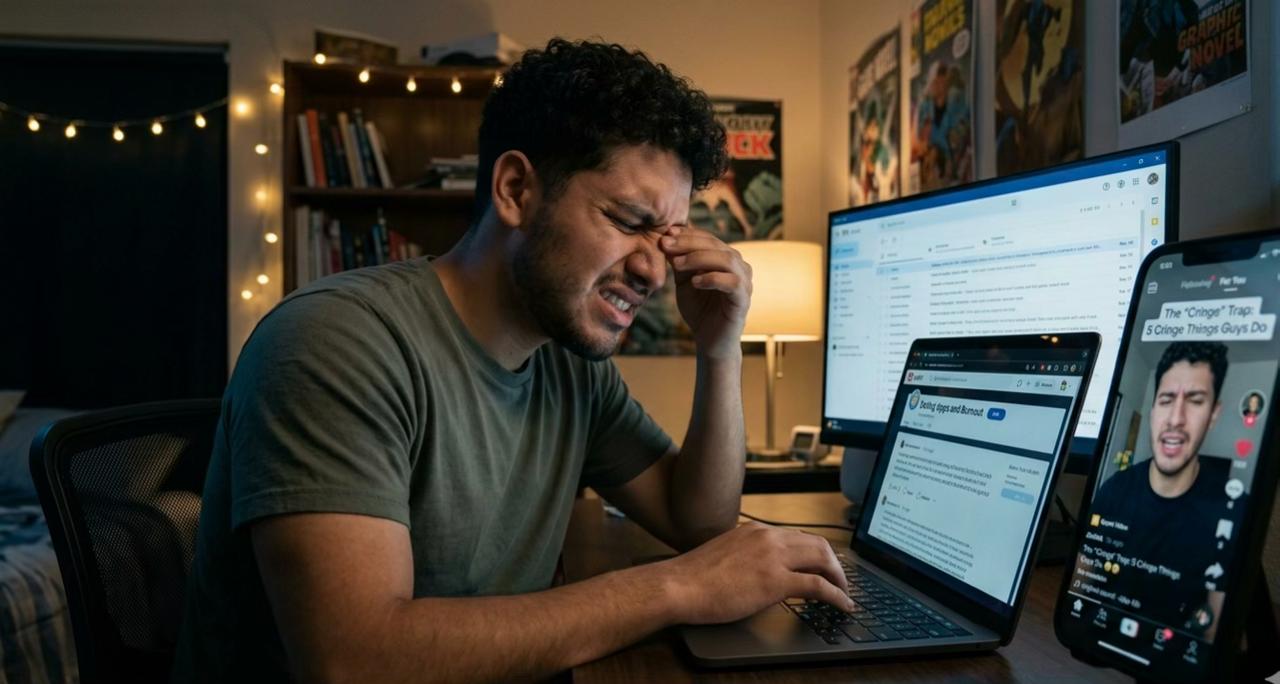
“I wish I could just delete my Instagram, but I can’t because nobody my age asks for phone numbers anymore. They just ask for your IG.”
— The Instagram Dilemma
“People on dating apps are flaky. You think you’ve started to connect with someone, and then they just ghost you.”
— The Ghosting Culture
“There are a lot of videos of people complaining and calling little things ‘cringe.’ As a guy, I feel like I can’t get anything right. If I’m too nice, I’m cringe. If I’m too aloof, I’m an asshole.”
— The “Cringe” Trap
“Our generation isn’t going the traditional route. There are so many stages now. First, you ‘hang out’ for a while. Then you get into a ‘situationship.’ Finally, you might start dating with commitment.”
— The “Situationship” Pipeline
“It seems like all my friends are either engaged or getting married on social media, and I’m so far behind. It makes me feel like shit.”
— The Comparison Trap
“I would much rather meet someone naturally in real life, but nobody does that anymore. Now, it’s viewed as weird if you approach someone you don’t know.”
— The Death of the “Meet-Cute”
“There’s no way in hell I will ever do online dating.”
— The App Boycott
How to Overcome Social Anxiety and Dating Fatigue Without the Apps

So, what are socially anxious young adults supposed to do? They feel forced to use systems that actively make them feel depressed, anxious and “not good enough.”
The good news is, with targeted, evidence-based cognitive-behavioral therapy (CBT) for social anxiety, it can get better. The apps and social media platforms aren’t going away. However, by building true self-esteem and empowerment, you can learn to turn down the digital volume. Some even choose to shut it off completely, taking a restorative digital detox.
1. Reclaim Real-World, Organic Connections
Connecting with people in meaningful, physical spaces is the most powerful antidote to digital isolation and loneliness. A massive shift is happening where young adults are meeting partners organically through:
- Local run clubs or specialized group fitness classes.
- Volunteer events and hobby groups.
- School clubs and faith-based communities.
2. Overcome Decision Paralysis and Ambivalence
A strengths-based approach to therapy helps individuals build the assertiveness and communication tools needed to navigate the ambiguous “talking phase” of modern relationships. Learning to clearly define boundaries protects your emotional energy.
3. Shift from External Validation to Self-Empowerment
When your self-worth isn’t tied to a matching algorithm, a notification, or a direct message, the sting of being ghosted loses its power.
The digital landscape may be chaotic, but finding authentic love doesn’t have to mean losing your peace of mind. By stepping out of the digital darkness, you can forge a path to calm, real-world confidence.
Clinical Resources & Support
- Find a Certified Cognitive-Behavioral Therapist: NSAC provides referrals to certified CBT providers with expertise in treating social anxiety disorder all around the United States. Use our state search tool in the blue block below this article
- Understand Your Symptoms: Complete one of our self-scoring, evidence-based questionnaires to get a better sense as to how intensely you experience social anxiety and avoidance in a wide variety of situations.
- Youth & Family Support: Access localized anxiety tools, peer support networks, and family guidance via the National Federation of Families Mental Health Resources.

References:
Gen Z Relationship Trends & Burnout Metrics. Gitnux: Market Research.
Dating App Fatigue and Mental Health Burnout Survey. Forbes Health.
Gen Z and Dating: Prioritizing Mental Health and Authenticity. LVC News: Lebanon Valley College.