

For many living with Social Anxiety Disorder (SAD), social events can feel like high-stakes performances. The pressure to appear interesting, funny, and “normal” can be so overwhelming that alcohol is often used as a safety behavior to quiet the inner critic and soften the sharp edges of anxiety.
In the moment, this “liquid courage” provides a welcome relief, typically resulting in:
- Lowered social inhibition and temporary relaxation.
- Increased talkativeness and a sense of ease.
- A reprieve from constant self-monitoring.
However, this relief comes with a physiological cost. By the next morning, the trap is set. You awaken with a pounding heart, fuzzy memories, and an impending sense of doom. This is hangxiety (hangover-induced anxiety), and for the socially anxious, it can trigger a multi-day psychological crisis.

The Chemistry of the Crash: Why Your Brain Overreacts
To escape the trap, it helps to understand how it’s built. Hangxiety is the result of your brain’s attempt to maintain homeostasis.
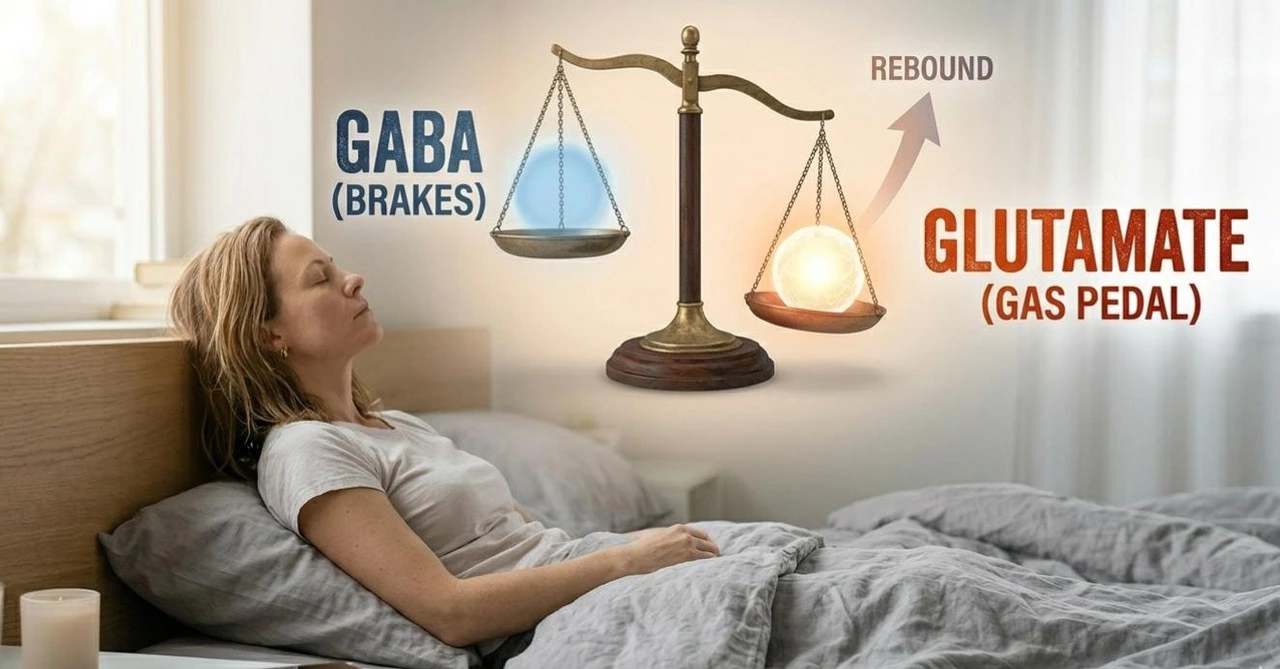
Alcohol is a central nervous system depressant that suppresses glutamate (the brain’s “gas pedal”) and boosts GABA (the “brakes”), promoting temporary calmness. Sensing it is being slowed down, your brain overcorrects by turning up glutamate production and inhibiting GABA receptors.
Once the alcohol is metabolized, the “chemical brakes” disappear, but the gas pedal remains floored. You are left in a state of physiological hyperarousal. While someone without social anxiety might feel merely jittery, a person with SAD often interprets this physical surge—racing heart, sweating, shallow breathing—as a signal of imminent social threat. Research indicates that individuals with higher shyness (a nonclinical analogue to social anxiety) experience significantly more elevated anxiety during this rebound phase (Marsh et al., 2019).
A Mind Searching for Threat
The trap is more than just a hangover. Because your body is in an amplified state of arousal, your mind feels a desperate need to find a reason why. This leads to post-event processing, a relentless mental replay of the previous night’s interactions.
Your mind becomes a biased detective, searching your memories not for the fun moments you shared, but for evidence of any social “crimes” you may have committed. For those with social anxiety, this detective work is heavily skewed by a baseline bias toward perceiving the self negatively.
Because alcohol lowers inhibitions, you may have acted more freely or shared more personal details than your sober, guarded self usually allows. Even if your behavior was perfectly appropriate, the contrast can trigger intense shame and embarrassment.
This spiral is further complicated by alcohol’s interference with memory formation. When you cannot perfectly recall a window of time, the mind refuses to accept the blank space. Instead, it generates a worst-case scenario to fill the void through cognitive distortions:
- Catastrophizing: Assuming the worst possible outcome (e.g., “I’ve ruined my reputation forever”).
- Mind Reading: Assuming you know others are judging you, despite no evidence.
- Emotional Reasoning: Believing that because you feel anxious and guilty, you must actually be guilty of something.
Identifying the Patterns
Common Hangxiety Thoughts
- “I talked too much or acted strangely.”
- “I can’t remember the last 20 minutes; I must have said something offensive.”
- “Everyone was judging me for being unprofessional.”
Common Hangxiety Experiences
- Mental Replay: Analyzing your tone and word choice for signs of awkwardness.
- Free-Floating Shame: Feeling embarrassed without a clear, specific reason.
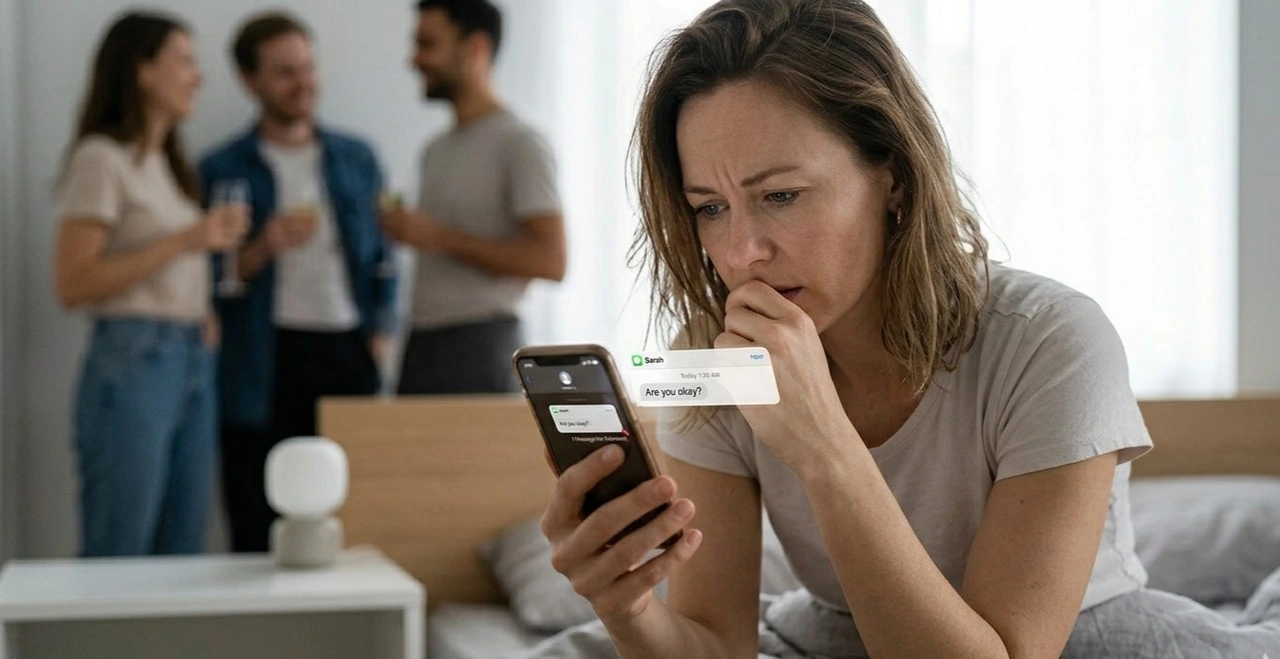
- Digital Dread: Fear of checking sent messages, calls, or notifications.
Common Hangxiety Behaviors
- Reassurance Seeking: Texting friends to ask, “Are we good?” or “Was I annoying?”
- Over-Apologizing: Apologizing for perceived missteps that others likely didn’t notice.
- Avoidance: Hiding away or canceling future plans to “protect” yourself from judgment.
A Dangerous Cycle: Alcohol as a Safety Behavior
The relationship between social anxiety and alcohol is often a powerful feedback cycle driven by negative reinforcement. Research suggests that social anxiety typically precedes alcohol misuse, as individuals adopt it as a tool to navigate feared social situations (Buckner et al., 2013).
Alcohol provides a temporary reprieve, but the resulting hangxiety creates a secondary crisis that the brain learns to resolve by drinking again. Because a drink can rapidly restore chemical balance and silence the morning-after dread, the brain learns to rely on alcohol as an anxiety management tool rather than developing authentic coping skills.
Clinical Strategies for Breaking the Trap
If you are caught in the hangxiety trap, you can find your way out by using techniques from cognitive-behavioral therapy (CBT).
- Label the Physiology: Remind yourself that much of what you feel is a chemical rebound (excess glutamate), not a social catastrophe.
- Fact-Check the “Evidence”: The brain after drinking is an unreliable historian. Ask yourself: What actual evidence do I have that someone is mad at me? If a friend acted the way I did, would I judge them this harshly?
- The 24-Hour Moratorium (Response Prevention): Commit to a “No-Reassurance” rule. In a state of hyperarousal, you may misinterpret a short reply as “they hate me.” Wait 24 hours for your chemistry to stabilize before sending any “checking” or apology texts.
- Practice Self-Compassion: Treat yourself as you would a friend. Practicing self-compassion without judgment sends a signal to your nervous system that you are safe.

If alcohol has become your primary strategy for handling social discomfort, expanding your toolkit can make a difference. This might include gradual exposure, cognitive restructuring, or nervous system regulation.
Find Support: You can use NSAC’s search feature [here] to find a local therapist skilled in CBT to help you navigate social anxiety and build authentic confidence.
Remember: alcohol is a loan of confidence with a high interest rate. True social confidence is built in the “dry” moments. By learning to be yourself—awkwardness and all—you prove to your brain that you are capable of navigating the world without a chemical crutch.
[Review & editorial oversight by Paul DePompo, PsyD, ABPP, NSAC Blog Coordinator.]References:
Buckner, JD, et al. (2013). A biopsychosocial model of social anxiety and substance use. Depression and Anxiety, 30, 276-284.
Marsh, B., et al. (2019). Shyness, alcohol use disorders and ‘hangxiety’: A naturalistic study of social drinkers. Personality and Individual Differences, 139, 13-18.
NSAC research summary about hangxiety.