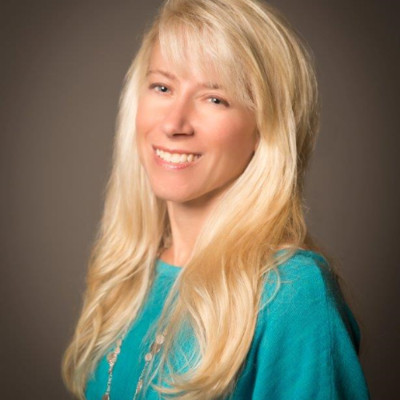
Julie is completing her PhD in clinical psychology, specializing in anxiety disorders research and treatment, with a specific focus on social anxiety. She began her career in improving healthcare by obtaining a master’s in health services administration and has served in various program and operational leadership positions in areas such as managed care, hospital operations, and community mental health. Her focus during this time was on the development of new programs and quality improvement of existing operations and programs. She has formal training in various quality improvement methodologies, which have shaped her research approach. She is now pursuing a long-time passion for improving care directly as a clinician and researcher in clinical psychology.
Julie has been studying and treating anxiety, with a specific focus on social anxiety, for over six years through master’s and doctoral level coursework, practicum experiences, and formal research projects. This past year, she gained additional specialized clinical experience at an outpatient anxiety clinic, where she completed new case evaluations and provided individual and group therapy to clients with anxiety disorders, including social anxiety disorder. Her clinical training has been enhanced by many anxiety-based research experiences, including the identification of anxiety and other disorder symptom moderators during COVID, training of integrated care partners on prevention and treatment of anxiety, use of a stepped care approach, and a critical evaluation of social anxiety CBT group treatment research design. She published articles in all of these areas.
Her dissertation builds on this work and focuses on developing a brief, intensive CBT group treatment for social anxiety disorder in emerging adults. The 20-hour group intervention was delivered last summer (2025) over two weekends, and she shared the results during the recent ADAA conference (2026). These experiences have contributed to her passion for developing, implementing, and evaluating innovative evidence-based treatments for anxiety disorders. More information on Julie’s publications can be found below.
What is your area of research?
My primary research interests are in developing, implementing, and evaluating innovative treatments for anxiety disorders with a specific focus on social anxiety disorder (SAD). I began pursuing my specific interests in social anxiety disorder, cognitive-behavioral therapy (CBT), and group interventions during my graduate program through various research papers and presentations, including a historical perspective of its recognition as a disorder and its evolving conceptualization and treatment.
Building on this background, my qualifying paper (Wojtaszek et al, 2024) allowed me to combine my growing research interests in improving treatment outcomes. It involved a thorough review and summary of the most current research on cognitive-behavioral group therapy (CBGT) for SAD, including a critical analysis of the overall methodological design quality, and recommendations to enhance future studies based on best practices. Highlights for clinicians included a summary of known mediators, moderators, and mechanisms of treatment, and current manuals used to guide groups and measures used to evaluate change in symptoms. The opportunities for improvement identified during this project sparked my interest in continuing evidence-based anxiety treatment research.
I also completed an analysis of the impact of culture and diversity on CBGT for SAD, presenting findings at a recent ABCT conference (Wojtaszek et al, 2025). Results from the collective group of studies originating from 12 different countries increase the generalizability of this treatment in some racial and ethnic groups, but additional research is needed. Recommendations for clinicians from this analysis include translating patient/client materials to fit native languages and incorporating more robust changes, such as the modification of examples used in psychoeducation to promote better understanding by different groups, the addition of distress tolerance and acceptance skills to validate experiences of discrimination, and including specific exposures, where appropriate, to align with experiences of minority stress and other gender identity, diversity, and cultural factors.
My research pertaining to SAD CBGT, coupled with my growing clinical experiences in treating SAD, inspired my dissertation work. The feasibility and acceptability study focused on developing a brief intensive version of CBGT for social anxiety disorder in emerging adults through two phases. The first phase used focus group feedback through individual interviews to inform the design and structure of the new intervention. Findings were presented at APA last year (Wojtaszek & Loverich, 2025) and included confirmation of known barriers to group therapy, such as scheduling and cost, as well as new insights for clinicians to consider, such as scheduling preferences for a brief intensive version, the importance of engaging social supports in retention, and patient/client desire to learn social, communication, and anxiety coping skills. The second phase involved piloting the brief intensive version over two weekends. Findings were presented at the recent ADAA conference (Wojtaszek & Loverich, 2026). Results supported the feasibility and acceptability of a brief intensive CBGT treatment intervention for the emerging adult population with SAD, delivering rapid and clinically significant progress in reduction of symptoms, and improved functioning and quality of life over a short time period. The intensive nature of this intervention may serve to decrease current barriers to treatment, such as scheduling and waning motivation, which often lead to attrition, but more research is needed.
Why is your area of research important to the advancement of understanding and/or treatment of social anxiety?
The development of innovative treatment is important given the high prevalence of social anxiety disorder, potential lifetime impairments, and low rates of treatment seeking and completion. Being able to provide brief intensive options to current treatment is essential in addressing barriers to treatment and improving outcomes for clients over a shorter time period.
What suggestions do you have for closing the gap between research and clinical work?
Some suggestions I have for closing the gap between research and clinical work include conducting more research in clinical/community settings, placing additional effort on translating research into clinical practice, and continuing to find ways to disseminate new research to clinicians in the field. Study findings from research and educational-based settings are extremely valuable, but do not always generalize to clinical and community-based settings, with potentially different patient/client populations and various provider and organizational differences that can impact implementation feasibility and treatment results. Therefore, more research in these environments would be helpful in confirming findings and/or in identifying important differences in these settings. In addition, translating applicable research findings into clinical practice would aid in overall efforts to increase evidence-based practice in the field. Finding ways to disseminate new research, such as through the NSAC, into digestible and practical implementation steps for busy clinicians, thus seems critical in continuing to advance the field and provide the best care to our patients/clients.
How did you develop an interest in this area of research?
My interest in developing and evaluating treatment for social anxiety stems from my past professional experience in quality improvement, my clinical work with clients with social anxiety, and my research over the years in identifying gaps and opportunities for improvement in treatment. I have grown as a clinician through varied assessment and individual and group therapy clinical experiences with clients in diverse settings (from an intensive day camp, college counseling, community clinic, and anxiety disorder-specific clinic). Unfortunately, many of my clients in these settings echoed past experiences described by my family members and friends of receiving care that was ineffective, inefficient (eg. not seeing progress quickly enough), or otherwise did not meet their needs. As a result, I began targeting these issues by designing, implementing, and publishing studies on the identification of symptom moderators, a critical analysis of group therapy treatment, and my dissertation study on developing an innovative brief intensive treatment for social anxiety disorder.
What do you like the most about research and what is the most challenging?
Given my prior background and strong interest in continuous improvement, what I enjoy most about conducting research is the opportunity to identify and test innovative approaches to conceptualization and treatment to reduce impairment and improve the quality of life for those with social anxiety. One of the significant challenges with research is often a lack of sufficient funding and the significant amount of time it takes from inception to dissemination of findings.
What are your professional goals post-graduation?
My professional goal post-graduation is to continue my dual role as a clinician and researcher, and become a leader in the field, developing, providing, and evaluating evidence-based innovative treatment for social anxiety and other anxiety-related disorders. For instance, I hope to further explore brief-intensive treatments for those with social anxiety and their effectiveness with emerging adult and adult populations in a community practice setting, as well as an evaluation of dose-response and content analysis to further elucidate the most impactful additions/modifications to current treatments.
What advice do you have for students seeking to conduct research on social anxiety in the future?
My advice for students seeking to research social anxiety in the future includes first gaining a comprehensive understanding of the conceptualization, assessment, and treatment options for social anxiety based on existing research. Another recommendation is to gain experience in treating social anxiety to better understand presenting concerns, unique challenges, and barriers and motivators of treatment. Use these experiences to identify gaps and opportunities for improvement. Last, but not least, join and participate in organizations such as the National Social Anxiety Center (NSAC), comprised of social anxiety researchers and treatment experts, to continue to further your knowledge in the field and share your experiences! I truly value my participation in the NSAC, including the insights I have gained from the monthly peer consultation, as well as the opportunity last year to provide a clinical education seminar to the NSAC membership on cognitive behavioral group therapy for social anxiety.
Presentation and Publication Citations:
Wojtaszek J, Koch E, Arble E & Loverich T. (2024). Cognitive behavioral group therapy for social anxiety disorder – A critical review of methodological designs. Journal of Anxiety Disorders, 107, Article 102928.
Wojtaszek J, Loverich T & Arble E. (2025, November 20-23). Cognitive behavioral group therapy for social anxiety disorder – Analysis of culture, diversity, and impact on treatment generalizability within a critical review [poster presentation]. Association for Behavioral and Cognitive Therapies (ABCT) Annual Conference, New Orleans, LA.
Wojtaszek J & Loverich T. (2025, August 7-10). Group therapy: Benefits, barriers, and using research to make groups more attractive [poster presentation]. American Psychological Association (APA) Annual Conference, Denver, CO.
Wojtaszek J, & Loverich T. (2026, April 9-11). Brief intensive cognitive behavior group therapy for emerging adults with social anxiety disorder [poster presentation]. Anxiety and Depression Association of America (ADAA) Annual Conference, Chicago, IL, United States.
Learn more about Julie’s research on cognitive-behavioral group therapy (CBGT) for social anxiety disorder in the clinical education webinar she presented to our NSAC members here.